
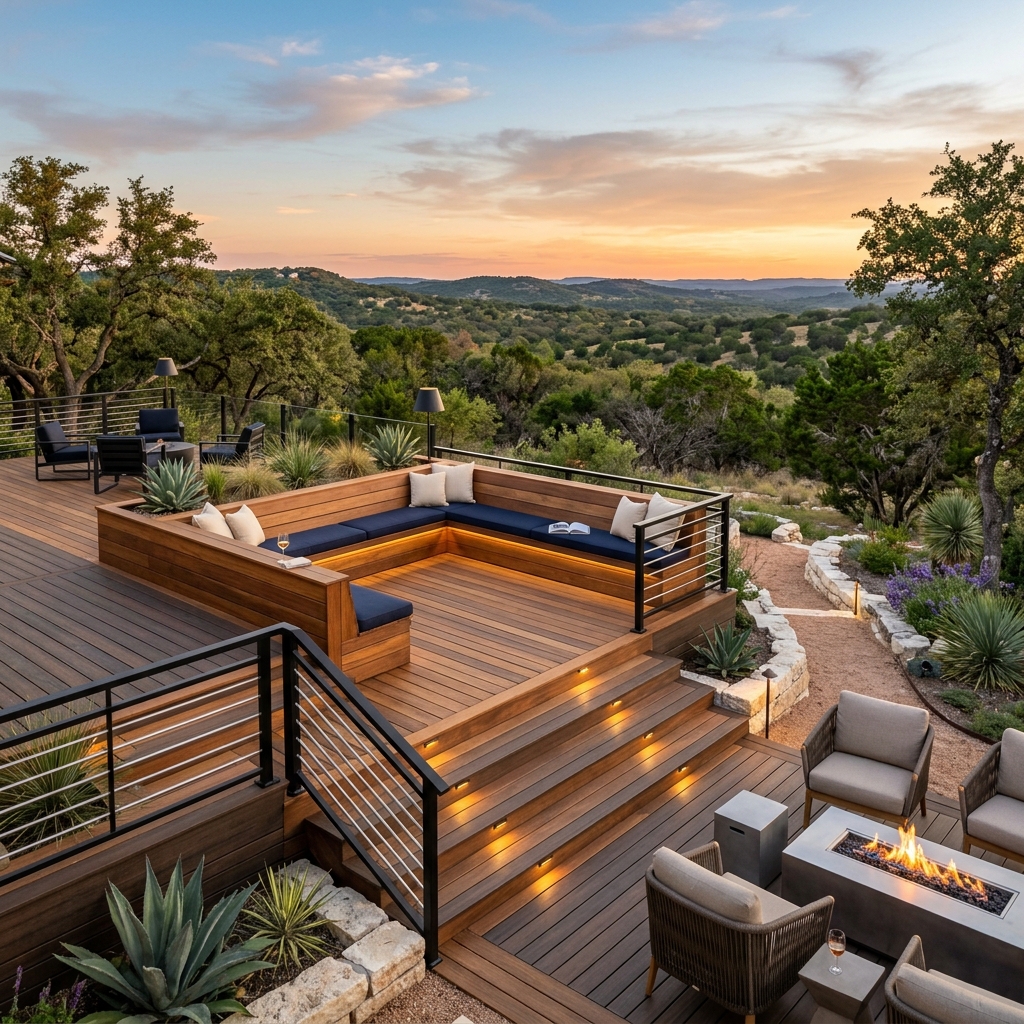
Why South Texas Weather Is the Ultimate Test for Decking
In San Antonio, Canyon Lake, Bulverde, and Kerrville, an uncovered deck endures extreme ultraviolet (UV) exposure, low afternoon humidity in August, and sudden heavy thunderstorms. Unprotected softwoods quickly warp, cup, check, and splinter if not properly selected and maintained.
Regardless of which surface board you choose, the longevity of a deck starts underneath: JRM Construction frames every substructure using ground-contact pressure-treated Southern Yellow Pine joists on 12-to-16-inch centers anchored to concrete piers with galvanized Simpson Strong-Tie hardware.
Comparing the 3 Best Decking Materials for San Antonio Homes
1. Capped Composite & PVC Decking (Trex, TimberTech/AZEK): Engineered boards wrapped in a protective polymer shell that resists fading, staining, rot, and termites without ever needing sanding or staining.
2. Western Red Cedar: Naturally rich in oils and tannins that resist decay and insect damage while staying cooler to the touch than dark synthetics.
3. Pressure-Treated Pine: The most budget-friendly structural option, ideal when finished with a high-solids UV-blocking penetrating stain.
- Capped Composite / PVC ($42 – $68+ per sq. ft. installed): 25-to-50-year manufacturer warranties, zero splinters for bare feet and pets, and hidden fastener clips. Tip: Choose lighter coastal grays or sandy tans—or pair with a covered patio—to minimize surface heat in direct sun.
- Western Red Cedar ($34 – $52 per sq. ft. installed): Authentic natural wood grain and lower thermal retention; requires cleaning and penetrating oil resealing every 2–3 years.
- Pressure-Treated Southern Yellow Pine ($26 – $38 per sq. ft. installed): High structural strength and lowest initial cost; requires diligent seasonal sealing to prevent checking in Texas sun.